

TL;DR:
- Inheriting a home in Nebraska requires understanding probate laws, taxes, and legal procedures.
- The process typically takes 6 to 18 months, depending on probate type and family cooperation.
- Early legal and physical preparations streamline sale options, whether via traditional listing, cash sale, or internal agreement.
Inheriting a home in Nebraska can leave you feeling pulled in every direction at once. There are legal documents to track down, family members with different opinions, and a property sitting empty while bills keep arriving. On top of that, Nebraska has its own probate rules, inheritance tax structure, and disclosure requirements that can catch out-of-state heirs completely off guard. This guide walks you through every major step, from the day you inherit the property to the day you hand over the keys, with clear explanations of what Nebraska law actually requires and practical advice for keeping the process on track.
Table of Contents
- What to do immediately after inheriting a home
- Navigating Nebraska probate: Do you need it, and what's involved?
- Preparing the property for sale: Key tasks for Nebraska heirs
- Selling and closing: From offers to ownership transfer
- A Nebraska expert's take: What most guides miss on inherited sales
- Sell your inherited Nebraska home with confidence: Next steps
- Frequently asked questions
Key Takeaways
| Point | Details |
|---|---|
| Gather documents early | Having the right paperwork speeds up the probate and sale process. |
| Understand probate needs | Probate is often required unless a trust, joint tenancy, or TODD applies in Nebraska. |
| Prepare for inheritance taxes | Nebraska counties levy inheritance taxes that impact your net proceeds based on your relationship to the decedent. |
| Communication prevents disputes | Agree on a sales plan with all heirs to avoid costly delays or court actions. |
What to do immediately after inheriting a home
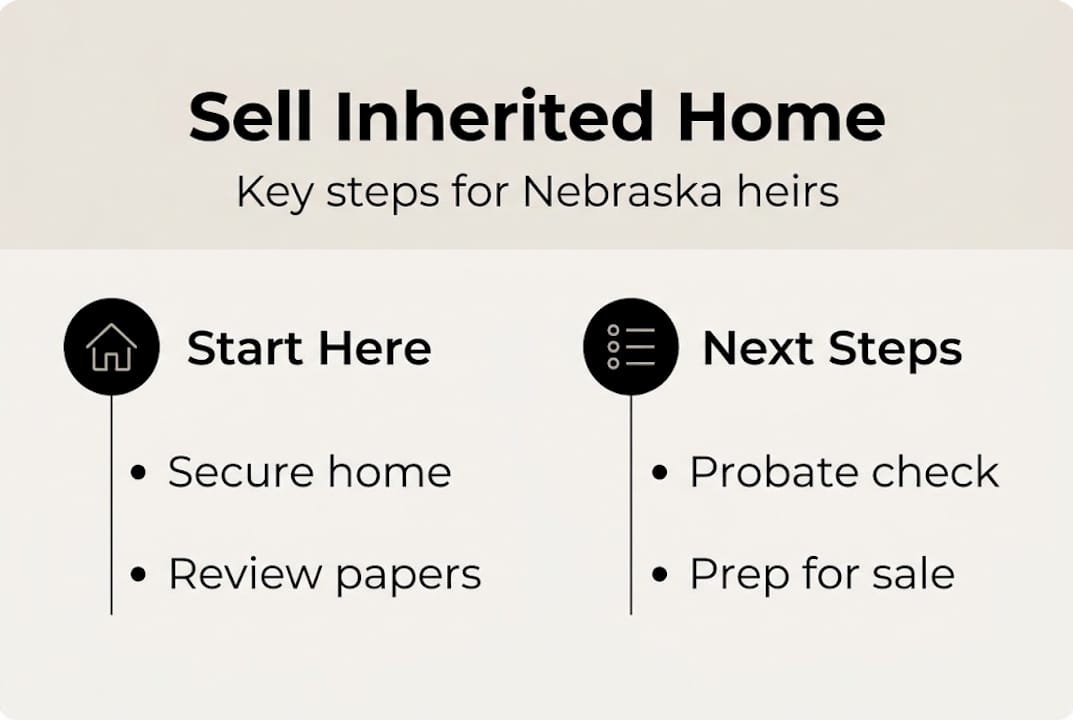
The first 30 days after inheriting a home matter more than most people realize. Decisions made early, or avoided early, tend to shape everything that follows. Before you think about listing prices or renovation budgets, there are a handful of urgent tasks that protect the property and your legal position.
Start by securing the physical property. Change the locks, check that smoke and carbon monoxide detectors work, and do a quick walkthrough for anything that needs immediate attention, like a leaking roof or broken window. An empty home deteriorates faster than an occupied one, and deferred maintenance can quietly destroy value.
Next, contact the homeowner's insurance provider. Many policies lapse or become void when the original policyholder dies. You need coverage in place as soon as possible because you are now responsible for the property. Ask specifically about vacant home coverage, since standard policies often exclude unoccupied homes after 30 to 60 days.
Gather every document you can find related to the estate. The core list includes:
- Death certificate (you will need multiple certified copies)
- The will or trust documents
- Prior deeds showing how the property was titled
- Mortgage statements and any lien documentation
- Property tax records
- Utility account information
Pro Tip: Keep utility payments current even if the home is vacant. Lapsed utilities can trigger city code violations, and some lenders require active utilities during a sale inspection.
The most important legal question at this stage is whether probate is required to transfer and sell the home. In Nebraska, probate is typically necessary unless the property was held in a trust, joint tenancy with survivorship, or via a Transfer-on-Death Deed (TODD). If you are unsure how the home was titled, the deed on file at the county register of deeds office will tell you. Understanding this early shapes your entire timeline. Families dealing with selling inherited houses often find that the titling question is the single biggest factor in how fast or slow the process moves.
Review Nebraska probate law basics to get a clear picture of what the state requires before you can legally transfer ownership. Acting on these first steps within the first few weeks puts you in a much stronger position going forward.
Navigating Nebraska probate: Do you need it, and what's involved?
Probate is the court-supervised legal process that validates a will, appoints a personal representative (PR), and authorizes the transfer of assets. For inherited homes, it is the legal gateway to selling the property when ownership has not already been arranged to bypass the courts.
As noted above, probate is required unless the home was in a trust, joint tenancy, or covered by a TODD. If none of those apply, you will need to open a probate case in the county where the property is located.
Nebraska offers two main probate tracks. Informal probate is faster and handled mostly through the county court clerk with minimal judicial involvement. Formal probate requires court hearings and is used when there are disputes, a missing will, or complex creditor issues. According to Nebraska probate timelines, informal probate typically runs 6 to 12 months, while formal probate can stretch 9 to 18 months or longer. For very small estates, a small estate affidavit may apply if personal property is under $100,000 and real property is under $50,000.
Here is a simplified look at the formal probate steps:
- File a petition with the county court where the decedent lived or owned property
- Court appoints a personal representative (with or without a will)
- Notify creditors, usually through a published notice with a 2-month claim period
- Complete an inventory and appraisal of all estate assets
- Pay valid debts, taxes, and administrative costs
- Receive court approval to sell or transfer the real estate
- Close the estate after all distributions are made
"Probate fees in Nebraska are generally modest, but delays caused by creditor claims or disagreements among heirs are common and can significantly extend your timeline."
| Scenario | Probate required? | Typical timeline |
|---|---|---|
| Home in living trust | No | Weeks to months |
| Joint tenancy with survivorship | No | Weeks |
| Transfer-on-Death Deed (TODD) | No | Weeks |
| Solely owned, no TODD | Yes (informal) | 6 to 12 months |
| Disputed will or multiple claims | Yes (formal) | 9 to 18+ months |
If you need to move faster, there are strategies for selling quickly during probate that can help reduce carrying costs while the legal process plays out. An executor checklist is also a useful tool for tracking every required step without missing anything.
Preparing the property for sale: Key tasks for Nebraska heirs
Once probate is underway or confirmed unnecessary, attention shifts to getting the property ready. This stage involves both legal preparation and physical preparation, and the order in which you tackle tasks matters.
Here is a practical sequence to follow:
- Order an appraisal. A licensed appraisal establishes fair market value, which protects you during negotiations and is often required by the court during probate anyway.
- Transfer or confirm title. Once the PR is appointed and authorized, transfer title via deed, clear any existing liens or debts, and confirm there are no title clouds from unpaid taxes or judgments.
- Address outstanding debts. Mortgages, property tax arrears, and mechanic's liens must be resolved before or at closing. Buyers and title companies will require a clean title.
- Disclose material defects. Nebraska law requires sellers to disclose known material defects. This applies to inherited homes too, even if you have never lived there. Disclose what you know and document your limited knowledge of the property's history.
- Clean and make targeted repairs. Deep cleaning and basic repairs almost always improve your final sale price. Major renovations rarely pencil out for inherited homes, but fresh paint and a clean yard go a long way.
Managing multiple heirs adds a layer of complexity. Disagreements about whether to sell, what price to accept, or how much to spend on repairs can stall everything. Set up a group communication channel early and agree on a decision-making process before emotions run high.
Pro Tip: Decide early whether a cash buyer or a traditional agent better fits your goals. An agent may get you a higher price but will take 3 to 6 months. A cash buyer closes faster but usually at a discount. If the home needs significant work, explore options for selling investment or rental property or review a quick sale guide for distressed properties to understand the tradeoffs clearly.
For more detail on preparing inherited homes for sale in Nebraska, the legal requirements and practical prep steps are worth reviewing before you list.
Selling and closing: From offers to ownership transfer
With the legal groundwork done and the property prepared, you are ready to sell. This is where your earlier decisions about cash buyers versus traditional listings pay off.
Your main selling options:
- Traditional market listing: A licensed real estate agent lists the home on the MLS. You get maximum exposure and potentially the highest price, but you also face showings, contingencies, financing delays, and agent commissions around 5 to 6%.
- Cash buyer or investor: Faster closing, often 2 to 4 weeks, no repairs required, and no financing contingencies. The tradeoff is a lower offer price, typically below market value.
- For sale by owner (FSBO): Saves on commission but requires significant time and knowledge of Nebraska real estate law.
For inherited homes in low-demand Nebraska areas, a cash buyer often makes more financial sense once you factor in carrying costs, repair expenses, and the time value of money. Visit Nebraska home selling resources for more context on local market conditions.
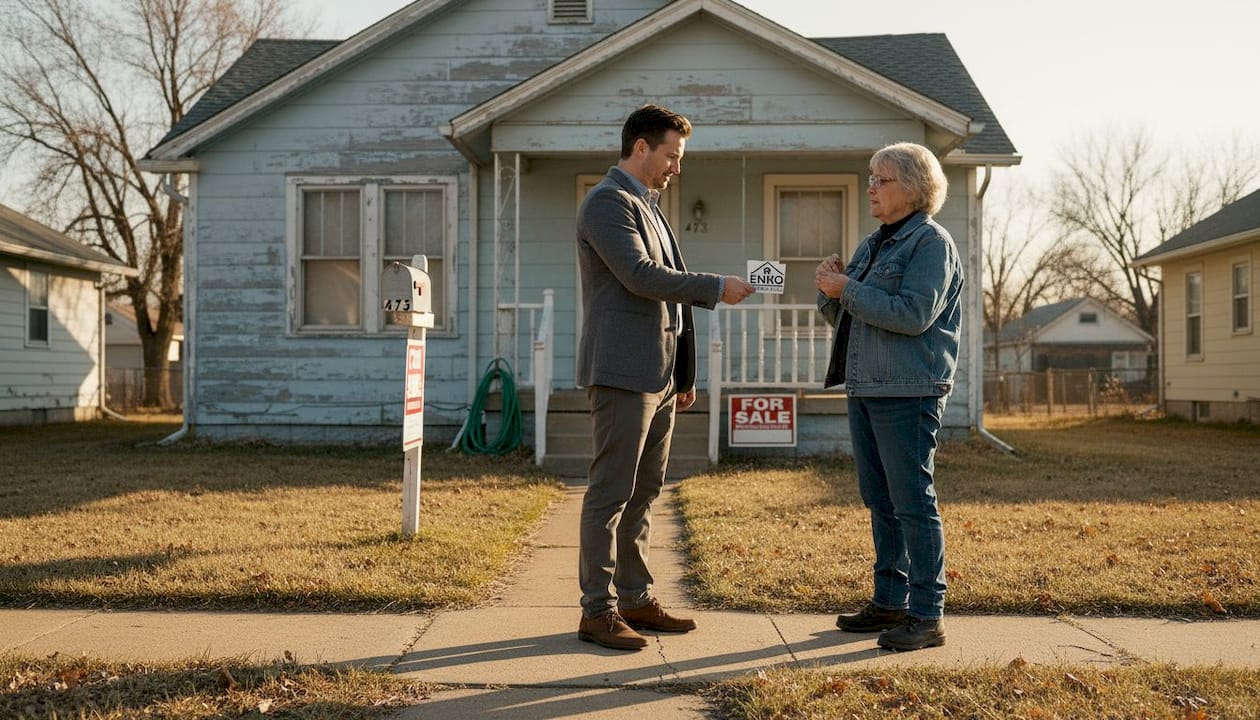
Nebraska's inheritance tax is one of the most important financial factors to understand before closing. Nebraska inheritance tax rates range from 1% to 15% depending on your relationship to the deceased, and the tax is administered at the county level. Spouses are fully exempt. Immediate relatives receive a $100,000 exemption. More distant relatives and unrelated heirs face higher rates and smaller exemptions.
| Heir relationship | Tax rate | Exemption amount |
|---|---|---|
| Spouse | 0% | Full exemption |
| Immediate family (children, parents) | 1% | $100,000 |
| Remote relatives (aunts, uncles, cousins) | 11% | $40,000 |
| Unrelated individuals | 15% | $25,000 |
For more detail on Nebraska inheritance tax facts, review the current county rates before you finalize your distribution plan.
Important stat: The combined probate and sale process in Nebraska can take 6 to 18 months or more, and ongoing costs like property taxes, insurance, utilities, and maintenance can easily run $1,000 to $2,000 per month on an average home.
At closing, the PR signs the deed, title transfers to the buyer, and proceeds are distributed after all debts and taxes are paid. Keep records of every transaction for tax purposes, especially for calculating capital gains using the stepped-up basis, which resets the cost basis to the home's fair market value at the date of death.
A Nebraska expert's take: What most guides miss on inherited sales
Most checklists tell you what to do. Fewer tell you what actually goes wrong. After working with families selling inherited homes across Lancaster, Douglas, and Sarpy counties, the patterns are clear.
The biggest time-saver is choosing informal probate and moving on it immediately. Many families wait weeks before contacting an attorney, and that delay can push the entire timeline back by months. Informal probate is available in most straightforward cases and cuts out unnecessary court hearings.
On cash offers: speed is real, but so is the discount. A cash offer on a home worth $200,000 might come in at $140,000 to $160,000. That gap is not always unreasonable when you factor in repairs, carrying costs, and the emotional toll of managing a vacant property for months. Know your local market value before you decide.
Family conflict is the most underestimated risk. Disputes between heirs over pricing, timing, or repairs can freeze a sale for months and sometimes end in costly partition lawsuits. Setting clear expectations at the very first family meeting prevents most of these problems. Families dealing with practical experiences with inherited sales often say they wish they had gotten everyone aligned earlier.
Pro Tip: Consult a Nebraska estate attorney before any disputes arise, not after. Prevention costs far less than litigation, and a one-hour consultation can clarify roles, rights, and responsibilities for every heir involved.
Sell your inherited Nebraska home with confidence: Next steps
Navigating probate, tax rules, and family dynamics while managing a property is a lot to handle. You do not have to figure it all out alone.

At Enko Home Buyers, we specialize in buying inherited homes across Lancaster, Douglas, and Sarpy counties, including properties that need work or are still in probate. We understand Nebraska's legal requirements and can move quickly when you need a straightforward solution. Whether you want a no-obligation cash offer or just need someone to walk through your options, sell your inherited Nebraska house for cash with a team that knows the local market. You can also learn about fast cash offers and see how the process works before committing to anything.
Frequently asked questions
How long does it take to sell an inherited home in Nebraska?
The probate and sale timeline usually runs six to eighteen months, though simple estates using informal probate or a small estate affidavit can close faster.
Do I have to pay inheritance tax on a Nebraska inherited house?
Nebraska inheritance tax rates range from 1% to 15% depending on your relationship to the deceased; spouses are fully exempt and immediate relatives receive a $100,000 exemption.
What if multiple heirs disagree about selling the home?
All heirs must reach agreement or one heir can pursue a buyout; if no resolution is reached, a partition action through the courts is the legal remedy, though it is slow and costly.
Can I sell an inherited home without going through probate in Nebraska?
Yes, if the home was held in a trust, joint tenancy with survivorship, or covered by a Transfer-on-Death Deed (TODD), you can transfer and sell without opening a probate case.