

TL;DR:
- Most Nebraska investment properties are purchased with cash, allowing quick, contingency-free deals.
- Investors focus on off-market and distressed properties to maximize discounts and reduce competition.
- Key metrics like cap rate, rental yield, and appreciation guide Nebraska investors' property evaluations.
Most people assume real estate investors lean heavily on financing. In Nebraska, that assumption is flat-out wrong. 82% of investor-owned properties are purchased with cash, meaning these buyers move fast, negotiate hard, and rarely wait on a bank to say yes. For anyone selling or sourcing distressed properties in Lancaster, Douglas, and Sarpy counties, understanding who these buyers are and how they operate isn't just interesting. It's the difference between closing a deal in two weeks or watching it drag on for months. This article breaks down the investor buyer profile, the deals they chase, and how you can connect with them.
Table of Contents
- Who are investor buyers in Nebraska?
- Why Nebraska investor buyers favor off-market and distressed properties
- How investor buyers evaluate Nebraska properties
- Strategies for working with Nebraska investor buyers
- The overlooked truth about investor competition in Nebraska
- How Enko Home Buyers can help Nebraska investors
- Frequently asked questions
Key Takeaways
| Point | Details |
|---|---|
| Cash dominates investor market | The majority of Nebraska investor buyers close deals with cash, ensuring speed and negotiation power. |
| Focus on distressed deals | Local investors seek off-market and fixer-upper properties for higher returns and less competition. |
| Data-driven decision making | Metrics like cap rate, rental yield, and price growth guide investor decisions. |
| Success favors preparation | Building local connections and presenting strong property data are key ways to work with Nebraska investors. |
Who are investor buyers in Nebraska?
Not every investor buyer looks like a Wall Street hedge fund or a big corporate buyer rolling into a new market. In Nebraska, the typical investor is a local individual or small group, often someone who owns a handful of rental properties or flips a few homes per year. These buyers know the neighborhoods, understand local pricing, and have built relationships with agents, wholesalers, and contractors over time.
The numbers tell a clear story. The vast majority of Nebraska investment properties (82%) are owned with cash, not loans. That matters because it strips away financing contingencies, shortens closing timelines, and gives these buyers leverage when negotiating below-market prices. Sellers dealing with distressed situations often accept lower offers just to get the certainty and speed that cash provides.
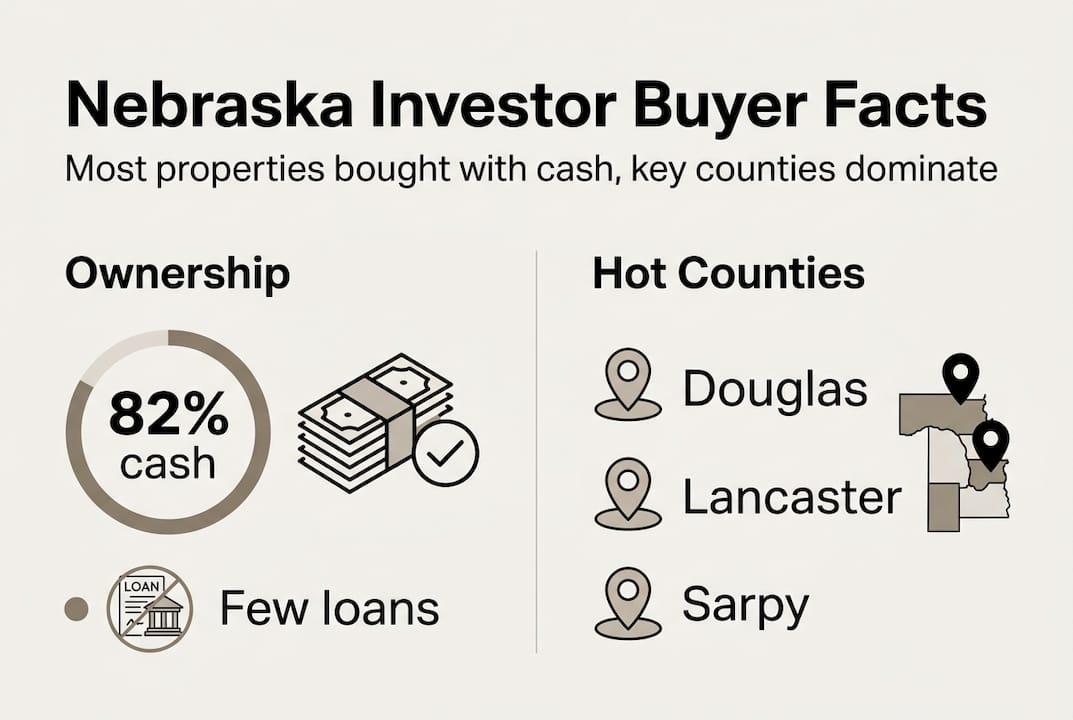
Investor activity clusters heavily in three counties: Lancaster (home to Lincoln), Douglas (Omaha), and Sarpy (the fast-growing suburb corridor). Each market has distinct characteristics, but all three offer a steady mix of renovation opportunities, motivated sellers, and strong rental demand.
Here's a snapshot of the typical Nebraska investor buyer profile:
| Characteristic | Detail |
|---|---|
| Buyer type | Individual or small group |
| Purchase method | Cash (82% of deals) |
| Primary counties | Lancaster, Douglas, Sarpy |
| Deal priority | Speed, certainty, discount |
| Property type preferred | Off-market, distressed, renovation-ready |
What separates these buyers from traditional homebuyers? A few key traits:
- They evaluate properties as income-producing assets, not places to live
- They move quickly when the numbers work
- They're comfortable buying properties with deferred maintenance or code issues
- They rely on relationships with finding cash buyers networks, not just the MLS
Pro Tip: If you're trying to sell or partner with an investor buyer, lead with numbers. They don't care about fresh paint. They care about the after-repair value, estimated renovation cost, and neighborhood rental comps.
Why Nebraska investor buyers favor off-market and distressed properties
Once you understand who investor buyers are, the next question is obvious: why do they chase off-market and distressed deals instead of just browsing the MLS like everyone else?
The answer is margin. A listed property has usually been prepped, priced by a real estate agent, and exposed to dozens of competing buyers. By the time you make an offer, you're already in a bidding war. The profit margin on a fix-and-flip or rental conversion shrinks fast when you overpay at the front end.
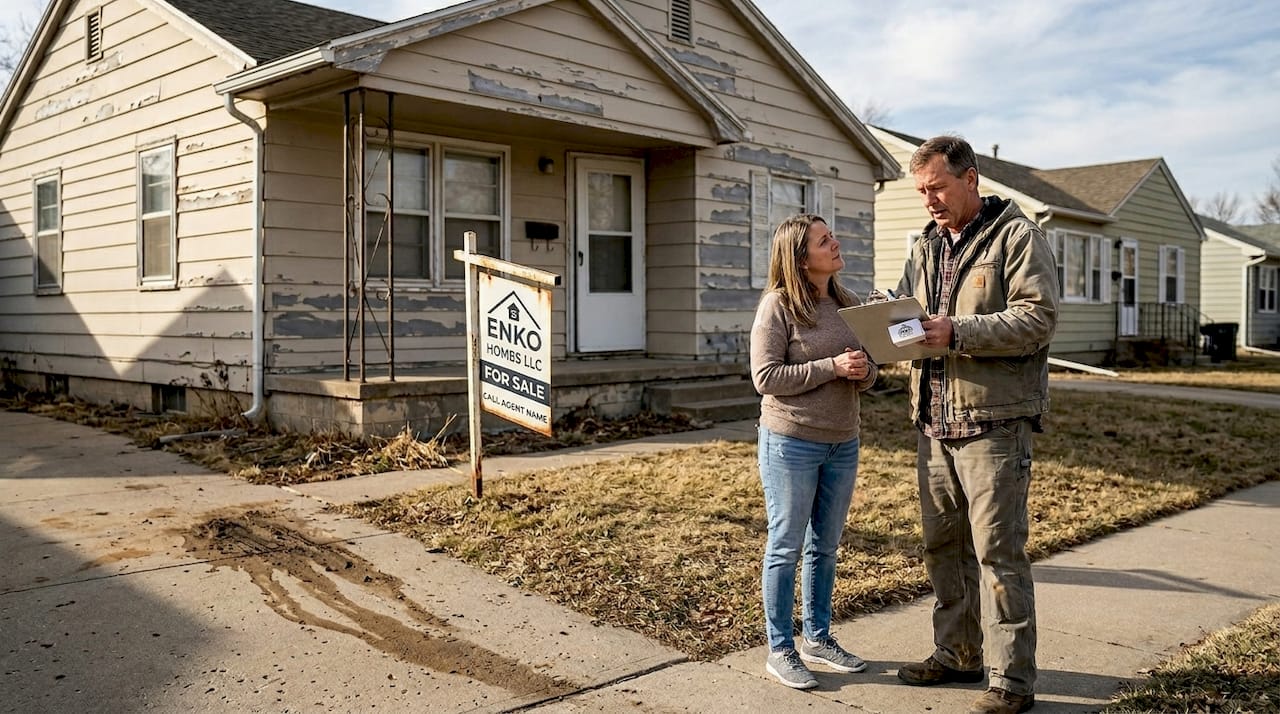
Off-market deals solve that problem. When a buyer connects with a motivated seller before a property ever hits the market, both sides can negotiate without competition. The seller gets speed and certainty. The investor gets a discount that makes the numbers work. No bidding wars. No inspection contingencies from nervous retail buyers. No 45-day waits for bank approvals.
Here's how off-market deals compare to MLS listings for investors:
| Factor | MLS listing | Off-market deal |
|---|---|---|
| Competition | High | Low to none |
| Negotiation flexibility | Limited | High |
| Closing timeline | 30 to 60 days | 7 to 21 days |
| Price discount potential | Low | High |
| Renovation properties available | Rare | Common |
Distressed properties add another layer of opportunity. Whether a home has deferred maintenance, code violations, or an owner facing foreclosure, these situations create motivated sellers who prioritize a clean exit over top dollar. Nebraska currently has 353 active foreclosures, giving investors a consistent pipeline of below-market opportunities across the state.
Here's why savvy investors focus specifically on distressed and off-market assets:
- Bigger discount at purchase means more room to profit after renovation costs
- Less buyer competition means no emotional bidding that inflates the price
- Creative deal structures like subject-to or seller financing become possible
- Faster transactions reduce carrying costs and improve overall returns
- Value-add potential through renovation creates equity that wasn't there before
The distressed property outlook in Nebraska continues to favor buyers who are ready to act. For sellers facing pre-foreclosure factors, connecting with an investor early is often the most practical path forward.
How investor buyers evaluate Nebraska properties
Every serious investor runs the numbers before making an offer. The analysis isn't complicated, but it has to be accurate. One wrong assumption on renovation costs or rental income can turn a promising deal into a money pit.
Three core metrics drive most Nebraska investment decisions:
Cap rate (capitalization rate) measures a property's income potential relative to its purchase price. In Nebraska, cap rates range from 5.5% to 9%, with a 6.2% average rental yield and 7.5% yearly price growth. A higher cap rate means more income relative to what you paid, which is why distressed properties with below-market purchase prices score so well on this metric.
Rental yield tells you how much annual rent you can expect as a percentage of the property's value. At 6.2% average, Nebraska compares favorably to coastal markets where yields often sit below 4%.
Annual price growth at 7.5% means buy-and-hold investors benefit from appreciation on top of rental income. That combination makes Nebraska a genuinely strong long-term market, not just a cheap entry point.
Here's how investors use these metrics in practice:
| Metric | Nebraska average | Why it matters |
|---|---|---|
| Cap rate | 5.5% to 9% | Measures income vs. purchase price |
| Rental yield | 6.2% | Annual rent as % of property value |
| Annual price growth | 7.5% | Long-term appreciation potential |
Beyond the big three metrics, investors also look at:
- Estimated renovation cost versus after-repair value (ARV)
- Neighborhood rental demand and vacancy rates
- Proximity to employment centers and schools
- Local property tax rates and landlord-tenant laws
Pro Tip: The fastest way to lose money on a Nebraska investment property is to underestimate renovation costs. Always get contractor bids before you finalize your offer, or build in a 15 to 20% buffer on your cost estimate.
Investors who understand fast-selling homes factors in Nebraska know that speed matters as much as price. A data-driven buyer who can close in 10 days often wins over a higher offer that needs three weeks of due diligence.
Strategies for working with Nebraska investor buyers
Knowing how investor buyers think is one thing. Knowing how to connect with them and structure deals they'll actually accept is another. Whether you're selling a property or trying to build your own investor network in Lancaster, Douglas, or Sarpy county, these steps will help you move faster.
- Network where investors already gather. Local real estate investment association meetups, wholesaler networks, and agent referrals are your fastest routes to active cash buyers.
- Lead with clean numbers. When presenting a property, include the asking price, estimated renovation budget, and comparable rental or resale values. Investors make fast decisions when the data is clear.
- Highlight renovation potential, not just current condition. An investor doesn't mind that the kitchen is dated. They want to know the ARV after a $25,000 remodel.
- Respect the value of speed. Every week a deal drags out costs money. Flexible closing dates and quick responses signal you're a serious seller or partner.
- Work with experienced home buying companies. These companies operate on volume and can close distressed properties faster than individual investors.
"The majority of buyers in Nebraska close deals fast, enabled by cash offers." That speed is a feature, not a pressure tactic. It protects both sides from market shifts and carrying costs.
Building relationships matters more than posting listings. The best off-market deals in Nebraska rarely show up on any platform. They move through trusted networks where find Nebraska cash buyers connections already exist. If you're new to this market, focus on showing up consistently at local events and providing value before you expect a deal.
For sellers who need to move quickly on a distressed or inherited property, fast selling solutions offered by home buying companies skip the friction of traditional sales entirely.
The overlooked truth about investor competition in Nebraska
Here's something most investor guides won't tell you: the biggest threat to your success in Nebraska's investment market isn't competition from other buyers. It's the assumption that timing is your most important variable.
We've watched investors sit on the sidelines waiting for a market dip or better inventory while well-prepared buyers with strong relationships closed deal after deal in Lincoln and Omaha. The distressed opportunities in Nebraska don't wait for ideal conditions. They show up when a seller hits a wall, and the buyer who already has a relationship wins every time.
The real edge comes from focusing on overlooked neighborhoods, crafting creative offers that solve a seller's specific problem, and being adaptable when deals don't fit a neat formula. Many of the best buys we've seen happen not because an investor had the highest price or the best timing. They happened because the investor understood what the seller actually needed and made it easy to say yes.
Readiness beats timing. Relationships beat raw data. That's the uncomfortable reality that separates investors who build real portfolios from those who are always getting ready to buy.
How Enko Home Buyers can help Nebraska investors
Putting these strategies into action is easier when you have an experienced local partner who knows Lancaster, Douglas, and Sarpy counties inside and out.
Enko Home Buyers specializes in fast, off-market property solutions across Nebraska's most active investment markets. Whether you're an investor looking for renovation-ready properties at a discount, or a seller needing a quick and fair cash offer, we work directly with you to simplify the process. We buy distressed, inherited, and rental properties without the delays of traditional sales. If you're ready to sell your Nebraska rental property or need to sell inherited properties fast, we can assess your deal quickly. Reach out to explore fast cash home sales that close on your timeline.
Frequently asked questions
What makes Nebraska investor buyers different from regular homebuyers?
Nebraska investor buyers typically pay cash, prefer off-market or distressed homes, and focus on properties needing renovation. Unlike retail buyers, 82% of investor-owned Nebraska homes are cash-purchased, which means no financing delays or contingencies.
How do investors find off-market properties in Nebraska?
They network with agents, wholesalers, and home buying companies, and monitor foreclosure lists for discounted opportunities. Investors focus on off-market deals and foreclosures specifically because competition is lower and margins are better.
What returns do Nebraska investors typically seek?
Most target cap rates between 5.5% and 9%, a 6.2% rental yield, and annual price appreciation near 7.5%. These key metrics: cap rates make Nebraska a strong market for both flips and long-term holds.
Why do investors pay cash for homes in Nebraska?
Cash offers enable faster closings, stronger negotiation leverage, and lower risk in distressed or competitive deals. With 82% of investor purchases being cash buys, it's the standard expectation in Nebraska's off-market investment scene.