
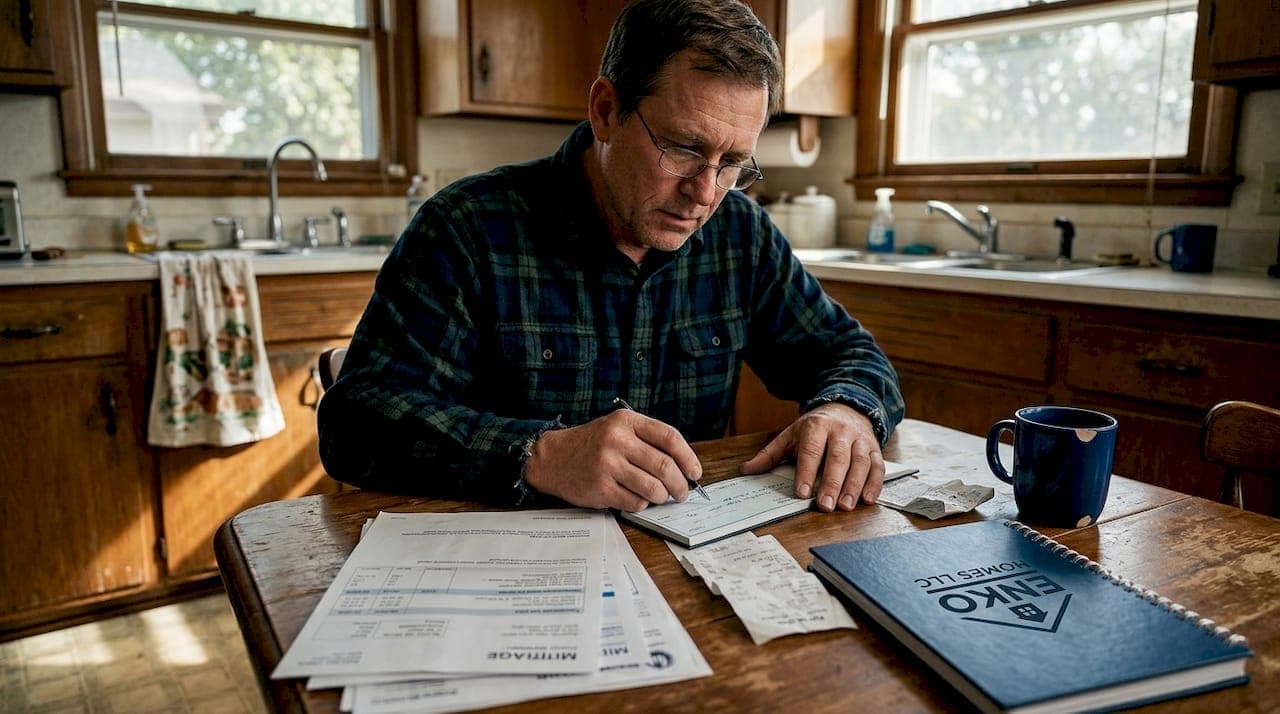
TL;DR:
- Financial and management issues often signal it's time to sell to avoid further losses.
- Nebraska's spring market offers higher prices and faster sales, ideal for timely property liquidation.
- Urgent personal circumstances make quick cash sales a practical solution for distressed homeowners.
Deciding whether to hold onto your property or sell it is one of the hardest calls a homeowner can make, especially when financial pressure is mounting or a rental is draining your energy. Nebraska's real estate market moves fast in the right conditions, but it can punish hesitation when your property is distressed or poorly timed. Whether you're behind on payments, managing a difficult rental, or navigating a major life change, knowing the specific signs that point toward selling can protect your financial future. This article walks you through four categories of clear, evidence-backed signals, plus a seasonal comparison tool to help you decide with confidence.
Table of Contents
- Financial warning signs that signal it's time to sell
- Property management challenges: When headaches outweigh benefits
- Market timing: Recognizing Nebraska's seasonal selling advantages
- Personal circumstances: Life events that make selling sensible
- A fresh take: Why waiting often costs Nebraska homeowners more
- Ready to take action? Fast cash offers for Nebraska homeowners
- Frequently asked questions
Key Takeaways
| Point | Details |
|---|---|
| Financial distress signals | Late payments or rising costs are clear signs it may be time to sell your Nebraska home. |
| Property headaches escalate | Ongoing repair and management challenges are reliable indicators for considering a sale. |
| Spring is optimal | Selling between April and June usually yields the best prices and fastest sales in Nebraska. |
| Act before property declines | Waiting can reduce your net proceeds, especially for distressed or problematic properties. |
Financial warning signs that signal it's time to sell
Money problems are the most urgent reason homeowners consider selling, and ignoring the signs can turn a manageable situation into a crisis. Nebraska is currently sitting in a seller's market, which means conditions favor action right now rather than later. But that window does not stay open forever, especially if your property shows wear.
Here are the most telling financial red flags to watch for:
- Persistent late mortgage payments. Missing one payment is stressful. Missing two or three in a row signals that your finances are structurally misaligned with your housing costs. At this stage, selling proactively gives you far more control than waiting for a lender to begin foreclosure proceedings.
- Repair costs eating your equity. When your home needs a new roof, updated plumbing, or foundation work, and those costs approach or exceed the property's appreciation, you are essentially paying to stay in place. Selling the property as-is to a cash buyer can recover equity before it disappears entirely.
- Property taxes and insurance creeping upward. Nebraska property taxes vary by county, but Lancaster, Douglas, and Sarpy counties have seen steady increases. When your insurance premiums and tax bill climb year over year without a matching rise in income, carrying the home becomes a liability rather than an asset.
- Negative cash flow on a rental. If your rental property costs more each month than it earns, you are funding someone else's home at your own expense. Many landlords convince themselves the numbers will turn around. Often, they don't.
Understanding your local market conditions matters enormously here. Nebraska's median days on market sits at 36 days with only 3.3 months of inventory, making it a seller's market overall, but distressed properties sit longer or sell at sharper discounts. That distinction is critical. A well-maintained home moves in weeks. A home that needs work and has a motivated seller behind it can linger for months and still fetch less than expected.
Pro Tip: If you're carrying financial stress and the property needs significant repairs, consider selling your Nebraska home fast before spring demand peaks. April through June consistently delivers the strongest prices and fastest closings in Nebraska, so listing or accepting a cash offer in late winter can align you with that seasonal advantage.
The bottom line is simple. Financial pain compounds over time. Every month you delay, you accumulate mortgage interest, tax obligations, insurance premiums, and possible repair costs. If two or more of the bullet points above describe your situation today, that's a credible signal to act.
Property management challenges: When headaches outweigh benefits
Owning a rental property sounds like passive income. In practice, it's often a second job with no guaranteed paycheck. Nebraska landlords in urban counties like Douglas and Sarpy face a range of property management burdens that, when stacked together, make selling a genuinely attractive option.
Here are the most common management problems that push owners toward the exit:
- Frequent vacancies. Every month your unit sits empty is a month you're covering the mortgage, utilities, and property upkeep out of pocket. High vacancy rates, particularly in properties that need cosmetic upgrades, signal a structural problem with the investment's profitability.
- Major recurring repairs. Roof replacement, foundation issues, outdated electrical systems, and persistent plumbing problems are not one-time costs. They recur. Each repair cycle drains capital that could be working for you elsewhere.
- Tenant disputes and damage. Eviction is emotionally draining and financially costly. Legal fees, court time, and property damage left by difficult tenants can wipe out months of rental income in a single incident.
- Regulatory compliance. Nebraska municipalities are increasingly focused on rental property standards. Keeping up with inspections, code requirements, and permit renewals adds administrative burden to an already stressful role.
"Distressed properties in Nebraska tend to linger or sell at steep discounts, meaning property owners who delay face compounding losses on top of their management frustrations."
The financial math here matters. Nebraska sellers net between 89% and 92% of sale price after typical closing costs, with a median home price ranging from $245,000 to $265,000. That's a meaningful recovery, especially compared to years of negative cash flow or escalating repair bills. Selling a problem property to a cash buyer, even at a slight discount to market, can outperform holding an asset that's costing you money every single month.
If you're wrestling with a property that's become more trouble than it's worth, the distressed homeowners guide breaks down exactly what your options look like in Nebraska's current market. And for homeowners dealing with uniquely difficult properties, the problem property solutions resource addresses the most common scenarios buyers like us encounter in Lancaster, Douglas, and Sarpy counties every week.
The emotional cost of problem property management is real too. Chronic stress from tenant issues or repair crises affects your health, your relationships, and your decision-making clarity. Sometimes recognizing the right time to sell is also recognizing that your peace of mind has value.

Market timing: Recognizing Nebraska's seasonal selling advantages
Even if you've identified financial or management-based reasons to sell, timing your exit strategically can make a meaningful difference in what you walk away with. Nebraska's real estate market follows a predictable seasonal rhythm, and understanding that rhythm helps you maximize your position.
Nebraska's spring selling window, running from April through June, consistently outperforms other seasons. Here's what that means in practice:
- Higher offer prices. Buyers who've been searching through the winter are motivated and competitive. Inventory is still relatively lean, which pushes offer prices upward.
- Faster closings. Spring buyers tend to be serious and financially prepared. The combination of motivated buyers and normal-paced financing means transactions close more smoothly.
- Better curb appeal. Nebraska winters are harsh. Snow, gray skies, and frozen lawns suppress a property's visual appeal. Spring brings a natural improvement to first impressions, even for homes that need work.
- More cash buyer activity. Investors and cash buyers, including local companies in Lancaster, Douglas, and Sarpy counties, actively ramp up acquisition efforts in spring to align with their own renovation timelines.
The seasonal data tells a clear story. Nebraska's spring market produces median prices between $245,000 and $265,000 with sellers netting 89% to 92% after costs, while off-peak months see both lower prices and longer marketing periods.
| Season | Avg. days on market | Median price range | Estimated net proceeds |
|---|---|---|---|
| Spring (Apr–Jun) | 28 to 34 days | $245K to $265K | 89% to 92% of price |
| Summer (Jul–Aug) | 35 to 42 days | $235K to $255K | 87% to 90% of price |
| Fall (Sep–Nov) | 42 to 55 days | $225K to $245K | 85% to 88% of price |
| Winter (Dec–Mar) | 55 to 75 days | $215K to $235K | 82% to 86% of price |
The implication for distressed homeowners is especially sharp. If your property needs work and you wait past the spring window, you are entering a slower market with a less competitive asset. That combination means longer holding costs and a lower final sale price. The pre-foreclosure factors in Nebraska resource outlines how timing intersects with financial urgency for homeowners facing lender pressure.
For homeowners who need to sell but aren't in a position to list traditionally, accepting a cash offer in late winter can effectively capture the spirit of spring pricing because cash buyers close quickly and often price their offers based on the forward-looking market rather than today's slow-season conditions.
Personal circumstances: Life events that make selling sensible
Beyond finances and market timing, life itself sometimes makes the decision for you. Major personal events often create urgent practical needs that align perfectly with a fast, straightforward home sale.
Here are the most common life circumstances that signal it's time to act:
- Inherited property. Receiving a home as part of an estate sounds like a windfall, but it often comes with property taxes, maintenance obligations, and the emotional complexity of managing a property you never planned to own. Many heirs live out of state, making the management burden even heavier. Selling the inherited home quickly removes that burden and converts an obligation into usable cash.
- Divorce or separation. When a relationship ends, the shared home often becomes contested territory. Selling quickly and splitting the proceeds cleanly removes one of the most contentious elements of the separation process and lets both parties move forward financially.
- Job loss or unexpected income reduction. When your income drops significantly, the math on homeownership changes fast. A mortgage that was comfortable at full income can become overwhelming within a few months of reduced earnings. Selling before you fall behind gives you options that waiting does not.
- Relocation for work. Nebraska has seen notable employment shifts across industries in Lincoln and Omaha. When a job takes you out of state, carrying a Nebraska property remotely adds cost and complexity. A quick home sale gives you the capital and mental freedom to focus on your new situation.
- Health changes or aging needs. Medical costs, assisted living transitions, or physical limitations that make home maintenance impossible are all legitimate triggers for selling sooner rather than later.
What these scenarios share is urgency. When life forces a timeline, the traditional listing process, with its staging requirements, open houses, and 30 to 60 day closing windows, becomes a poor fit. Distressed properties in Nebraska already sit longer or sell at discount, and layering a personal crisis on top of that makes the situation more stressful, not less.
Pro Tip: Cash buyers who specialize in off-market Nebraska properties can often close in as little as 7 to 14 days, which is a genuine solution for homeowners dealing with urgent personal circumstances. Speed and certainty matter as much as price when life is already complicated.
A fresh take: Why waiting often costs Nebraska homeowners more
Here's what most real estate articles won't tell you plainly: the instinct to wait for a better moment is one of the most expensive habits homeowners have. We are conditioned to believe that holding real estate is always the smart play. That's not universally true, especially for distressed properties in a market like Nebraska's.
Every month a struggling property sits unsold, it generates costs. Mortgage interest, property taxes, insurance, maintenance, and often emotional strain are all accumulating. When you add those monthly carrying costs to the discount a distressed property already faces in the market, the math frequently shows that selling earlier at a slightly lower price produces a better net outcome than waiting for a higher offer that may never materialize.
Nebraska's seller's market conditions with a median of 36 days on market and only 3.3 months of inventory are favorable for sellers who act decisively. But that advantage belongs primarily to properties in good condition. For homes that need work, the market is less forgiving, and delay makes it worse.
The smarter frame is this: decisive action preserves options. Selling a difficult property on your terms, before financial pressure forces your hand or the seasonal window closes, gives you control over the outcome. Waiting hands that control to the market, and the market is not sentimental. If you want to understand how home buying companies in Nebraska can actually serve your interests in this context, the answer is simpler than most people expect.
Ready to take action? Fast cash offers for Nebraska homeowners
If any of the signs in this article sound familiar, you don't need to navigate this alone.

At Enko Home Buyers, we specialize in purchasing off-market homes throughout Lancaster, Douglas, and Sarpy counties, particularly properties that need work and owners who need a fast, fair resolution. Whether you're dealing with a distressed property situation, a rental you're ready to exit, or an inherited house that needs to move quickly, we provide straightforward cash offers with no repairs required, no commissions, and no drawn-out process. Reach out today and get a no-pressure offer that matches your timeline and your real circumstances.
Frequently asked questions
How long does it typically take to sell a home in Nebraska?
The average Nebraska home sells in about 36 days, but distressed properties often sit significantly longer or close at a discount compared to market value.
What's the best season to sell a home for the highest price in Nebraska?
Spring, particularly April through June, delivers the strongest Nebraska sale prices and fastest closings, with median prices ranging from $245,000 to $265,000.
How much can I expect to net after selling costs in Nebraska?
Most Nebraska homeowners net between 89% and 92% of the final sale price after accounting for typical closing costs and agent fees.
Are quick cash offers safe for distressed homeowners in Nebraska?
Cash offers from reputable local buyers are a reliable option, especially since distressed properties in Nebraska already face longer market times and steeper discounts through traditional sales channels.